Product Description
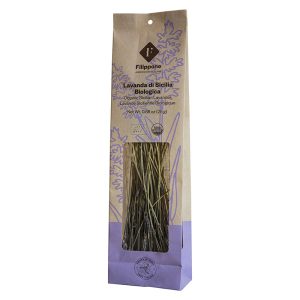
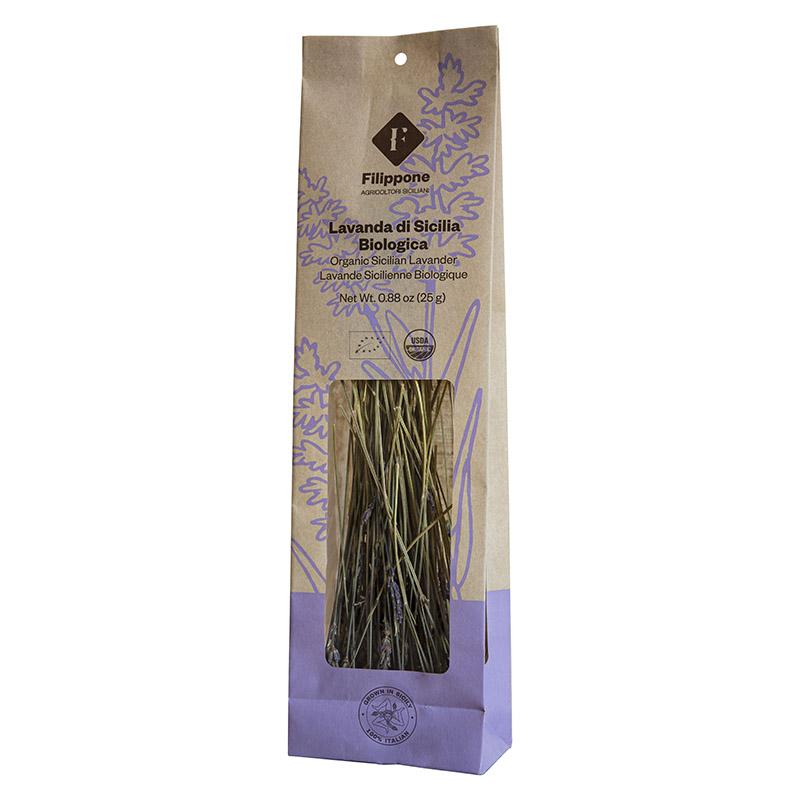
Lavender is a small perennial shrub native to the Mediterranean vegetation. It tolerates both scorching temperatures and harsh winters very well and grows in arid and stony soils, forming particularly beautiful bushes.
The common name “lavender” was adopted into the Italian language from the Latin gerund “lavare” (that which must be washed), referring to the fact that these species were widely used in antiquity to purify the body. Lavender was, in fact, a plant highly valued by the Romans, who placed flower branches in thermal waters and used it as a base for exquisite perfumes and in the preparation of decoctions and infusions to beautify the skin and hair.
Lavender is rarely used for culinary purposes. However, it is used to flavor white wine and vinegar, to make jams, and to flavor desserts.
The characteristic aroma of lavender is due to the essential oils produced in all the green parts of the plant and concentrated, especially, in the flowers. Lavender flowers are used in herbal medicine for their numerous properties, due to the presence of essential oil and other active principles that give the plant a sedative and calming effect on the nervous system. Therefore, they are used for anxiety, agitation, nervousness, headaches, stress, and insomnia. Due to its balsamic action on the respiratory tract, lavender is used for flu, coughs, colds, and runny noses; it is also recognized for its carminative and antispasmodic properties.
For external use, it has cleansing, anti-inflammatory, analgesic, antibacterial, healing, and decongestant properties. The plant is used to clean wounds and ulcers, and to relieve itching and insect bites.
In cosmetics, lavender essential oil is used as a perfume. Dried lavender flowers retain their aroma for a long time, so much so that they are commonly stored in muslin or fabric bags to perfume bed linens.
Country of Origin:
Italy
Distributed by:
Socilink Lda
Rua Quinta dos Álamos n.º 3, 2625-577 Vialonga, PORTUGAL
Notice about our product information:
Always confirm the information on the article label. Food products are subject to constant change, for this reason, we recommend that you always read the labeling information that accompanies each product, including the nutritional information, ingredient list, storage, preparation and use instructions as well as other information before use or consumption.